Through Reading
- Home
- Why Is Reading Important
- Sounds Letters Make
- Working With Syllables
Working With Syllables
By Glenn and Diane Davis
It is essential to break words into syllables when learning to read or working with hard words. A syllable is the smallest part of a word. Even long words become easy to read when working with syllables to break them down into their smallest parts - usually 1 - 4 letters each. Even a word like "consciousness" can be read by a first grader when broken down into smaller parts: con scious ness. Of course, Read With Confidence students who know the rules for "c," "ci," and "ous" will find it super simple.
If you recognize the spoken word, you can figure out the syllable divisions by gently clapping as you say the word or placing your hand under your jaw and feeling when your jaw moves up and down. You can experiment with this on words you know well to see how it works. Then you can use it on words you are unsure of. If you are working with syllables in a word that is not in your spoken vocabulary, it becomes more difficult. For example, is "open" broken as "o pen" or "op en?" How you break it down will change how you say the word.

As the English language is made up of languages from around the world, there will always be exceptions to general rules. The only way to be absolutely certain you are breaking words that are not in your spoken vocabulary into the correct syllables is to consult a dictionary. Since dictionaries are not always available, it is vital to know the general rules for working with syllables, which work most of the time.
Be a detective and look for these clues:
Working With Syllables
Clues
Clue 1. When working with syllables and their divisions, it is important to keep in mind that each syllable only has one vowel sound. When looking at a word, count how many vowel sounds are in the word, and you will know how many syllables it has. Be careful, though. Do not count silent vowels. Vowels that combine to make a single sound are counted only once.
For example:
Necessary = nec es sar y - each vowel is in a syllable by itself.
Caveman = cave man - the first "a" and the "e" are in the same word break because the "e" is silent [Read With Confidence students know why!] and so does not count.
Friend = friend - all one syllable, even though there are two vowels, because the vowels combine to make only one sound, the short "e."

Clue 2. Make a break between compound words. For example: teacup = tea cup
Clue 3. Make a break after a prefix and before a suffix if the prefix or suffix has a vowel sound. For example: remain = re main and costly = cost ly.
Clue 4. Syllables break between double consonants. For example: dinner = din ner.
Clue 5. If there are two consonants in the middle of a word, the break usually comes between them unless the two consonants are a consonant blend [only make one sound]. For example, basket = bas ket and weather = weath er - the "th" only makes one sound, so cannot be broken up.
Clue 6. When there is a single consonant in the middle of a word, the break normally comes before the consonant. For example, open = o pen.
Clue 7. When there is a word that has an "le," which sounds like "el," the break usually comes before the consonant which is in front of the "le." The exception is words that have a "ckle." For example, mumble = mum ble, but tickle = tick le.
If you are working on the Internet, you may want to use this Syllable Counter.



It may be interesting to note that there are three possible parts to a word break: the syllable onset, the nucleus, and the coda. It sounds a little like Science and not English! The nucleus is the main part of the word break, usually the vowel. The syllable onset is the consonant[s], which comes before the nucleus, and the coda is the consonant[s] that comes after the nucleus. Not every word break has an onset or a coda.
Whether you are teaching syllables or just learning them, I trust this has helped to you. At Read With Confidence, we want to build the best readers possible, and everyone who can speak English can learn to read English!
If you or someone you love is struggling with reading, we can help. With just 60 hours of instruction on average, we turn them into confident readers who will have the tools to continue developing their skills for a lifetime. This is too important to miss. Sign up for our complete reading program now.
Web references for this article: Glendale College [the exact page does not appear to be currently available] and Wikipedia.
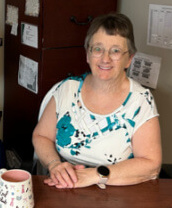
Diane Davis is a Reading Specialist focused on phonics instruction and helping parents support children as they learn to read. With more than 20 years of experience, she has helped over 100 students build stronger reading foundations and confidence. Readers are welcome to explore Diane’s testimonial page. In her free time, she enjoys reading Christian romance and suspense novels.