Through Reading
- Home
- Why Is Reading Important
- Tools to Help With Reading
Tools To Help With Reading
By Glenn and Diane Davis
The world of words is a great place, but we all need tools to help with reading. Those marks on paper can be frustrating and embarrassing if we don't know what they mean. Sometimes it is more than just inconvenient. It can be dangerous if, for example, a person cannot correctly read the instructions on a medicine bottle. And, let's face it, there was a time when all of us were in the dark. None of us was born knowing how to read. For some of us, the lights were turned on early as we received the necessary tools to help with reading. For others, it has been a lifetime struggle with those mysterious lines and swirls.

Reading, unlike spoken language, is a learned skill. Older people who need reading help are no less intelligent than those who no longer need reading instruction. Many adults who struggle with reading English are highly intelligent people. Most of the time, the only difference in reading skill levels is in the method used to teach the skill. [Possibly, the Whole Word method was initially introduced to purposely slow down the reading process.] Everyone who can speak English can learn to read English. The Read With Confidence program's phonetic approach has proven highly effective in providing tools to help with reading fluently to those who are still struggling. Students are led through all the phonetic rules, one small step at a time. Patient repetition and reinforcement aid in mastering this reading skill, even for those who struggle the hardest and feel it cannot be done. Faces radiate with excitement as they discover that they, too, can read. We should all be on the same page! Students who have failed in other phonetic programs have found success here.
Whether you are a client or a visitor, I trust you will enjoy our pages below. They are not directly part of the program, but should be fun and educational. They represent free tools to help with reading if you choose not to enrol in our program. We still want you reading! Remember, it's easy to become a client and reach your reading potential with our step-by-step reading help program. Everyone can learn to read!
Tools To Help With Reading
Articles
The first step is to go to our Sitemap and browse the helpful articles there. There you will find tools to help with reading, like how to break words into syllables, hints for working with consonant blends, the "I Before E Except After C" rule and why it is wrong, when to know when TU will copy CH, plus more. Be sure to check it out!
Free Books

We also have three classic books for free, rewritten in one-syllable words [with very few exceptions]. You may think that a one-syllable word story can be boring, but you will be amazed at how many one-syllable words there are! It is easier for a preteen or teenager struggling with reading to read a book with fewer long multisyllabic words.
Each book is about ninety pages long. That's over ninety pages of reading practice arranged in an exciting story. Download and print off these books as reading worksheets and have your child or student pronounce each word as they read the story. If they don't know the letter sounds, they should be taught them before the books are used. If you are in the Read With Confidence program, students should be able to read many of the words without help after lesson four.
There are three books available for you to download and print. They are in PDF format and great for beginning readers. Of the three, Swiss Family Robinson is the best.
Swiss Family Robinson is about a shipwrecked family on a tropical island. They must use their wits to survive as they build a new life and face dangers from sharks and giant boas, among other things. It is divided into chapters, and younger readers often enjoy reading a "chapter" book. It is a good story with no negative elements.
Robinson Crusoe is also the story of a shipwreck. Unlike the Swiss Family Robinson, Crusoe is the sole survivor. He must fend for himself and fight against cannibals and "wild men." Although it is written in one-syllable words, this story is for older readers, and the ending can be confusing. It is not divided into chapters. Also, one must understand the times when it is written as Robinson Crusoe; at points in the story, both becomes a slave and enslaves people. Nevertheless, it is a good read.
Pilgrim's Progress, in one-syllable words, is the classic Christian allegory. Christian leaves the City of Destruction to brave the dangers of the journey to the Celestial City. This also includes Christiana's adventures as she and her family set out after Christian. This is more difficult to read than the two stories above because the names must be left in multisyllabic words. The author, John Bunyan, was inspired to write this story after having a dream while in prison for preaching the Gospel.
You can find and download these books for free on our sister site, Glenn Davis Books, on the Free PDF Books page under Young Adults - Godolphin, Mary.
Free McGuffey Readers

McGuffey Readers are a famous series of textbooks widely used [about 120 million copies sold!] in the USA between the 1840s and 1960s to teach reading. They are still used today in homeschooling and a few private schools.
"Welcome to the schoolroom of 1900. The moral tone is plain. 'She is kind to the old blind man.'
"The exercises are still suitable, and perhaps more helpful than some contemporary alternatives. Much is left to the teacher. Explanations given in the text are enough to get started teaching a child to read and write. Counting in Roman numerals is included as a bonus in the form of lesson numbers." Don Kostuch
McGuffey readers are tools to help with reading English. These books can be used with a variety of reading methods, including phonics. If you have read much on this site, you will know that phonics is the best way to learn to read. It works naturally with the brain's language system and allows students to pronounce words they have never seen before.
The weakness of the McGuffey phonetic system is that it teaches words and sounds together. The student could easily be memorizing the words instead of using their phonics. And because they only introduce a few words at a time, it would still take a long time to become efficient at reading. The McGuffey system is missing some of the sounds. For example, it lists only six sounds for "a," but our students know there are nine. The Read With Confidence program teaches the main letter sounds first and then applies them to a variety of words. After the very first lesson, the student will have phonetically read 300 words! The average student [of any age] completes the program in 60 hours of instruction and is then equipped to read the majority of the nearly one million words in the English language. I have not seen any other reading program that can do that! Check out what we teach here.
Nevertheless, McGuffey readers are useful tools if you cannot attend Read With Confidence or do not want to take our course online. They are also suitable for additional information, research, and getting a feel for what school was like in the 1900s. They are totally free - enjoy!
These eBooks are for anyone, anywhere, at no cost and with almost no restrictions. You may copy it, give it away or re-use it under the terms of the Project Gutenberg License included with these eBooks or online at www.gutenberg.org.
How long it will take you to download the McGuffey readers depends on your connection and computer speed. You will find them on our sister site, Glenn Davis Books, on the Free PDF Book page under Non-Fiction.
I trust you will enjoy these free resources. But if you, or a loved one, struggle with reading, our program will help you master this vital skill. On average, a student completes our entire program with only 60 hours of instruction. They have then read thousands of words and are equipped to read whatever material interests them. Don't be held back in life by poor reading skills. Invest in your future or your loved one's future. Sign up for our comprehensive reading program today.
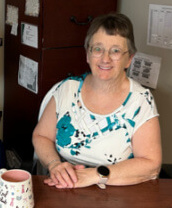
Diane Davis is a Reading Specialist focused on phonics instruction and helping parents support children as they learn to read. With more than 20 years of experience, she has helped over 100 students build stronger reading foundations and confidence. Readers are welcome to explore Diane’s testimonial page. In her free time, she enjoys reading Christian romance and suspense novels.